What Industry Really Knows About the future of work
AI and the Narrative of Transformation
A recently published chart by Anthropic, mapping professions potentially affected by artificial intelligence, which has attracted a lot of attention, fits neatly into an increasingly dominant narrative: that we are on the brink of a radical transformation of work, where entire professions will disappear or be fundamentally reshaped.
These assessments no longer come from the margins—they come from the very center of technological power. In an era of tech billionaires and rapid AI development, predictions about the future of work are becoming almost normative: they do not merely describe the future, they actively shape it.
The Problem with Current Predictions
The issue, however, is not that these predictions are bold—it is that they are often based on a limited understanding of the reality in which work actually takes place.
From a personal perspective, with an educational background in the social sciences and over fifteen years spent building a career in an environment shaped by engineers and other technical professionals, it has become clear that there is a deep gap between these two worlds.
On one side, there is a technological discourse that views work as a set of functions to be optimized, standardized, and ultimately automated. On the other, there is industrial practice, where work is inseparable from context, experience, improvisation, and responsibility.
When Work Becomes Reduction
In combination with new technologies, this trend tends to reduce work to measurable units of output, standardize behavior, and minimize everything that cannot be quantified. Within such a framework, human potential is not developed—it is narrowed to what is operationally useful in the short term.
Work becomes a sequence of tasks, rather than a process in which people make decisions, take responsibility, and develop knowledge.
The Ethical Dimension We Ignore
At the same time, this process reflects a broader global societal issue: the systematic neglect of ethical standards in both business and everyday life. In environments shaped primarily by metrics, performance indicators, and short-term outcomes, essential dimensions of human development—such as responsibility, integrity, judgment, and moral reasoning—are increasingly overlooked or misunderstood.
This is not merely a corporate flaw, but a structural problem in how modern systems shape individuals: by prioritizing efficiency over ethics, they risk producing not only weaker organizations, but also diminished human capacity for meaningful decision-making.
The paradox is that this approach, often justified in the name of efficiency and profit, increasingly produces the opposite effect. Systems that are overly rigid become fragile. Organizations that ignore the human factor lose their ability to adapt. Processes that appear optimized on paper begin to fail under real-world conditions.
In other words, the dehumanization of work does not lead to its superiority—it leads to its limitation.
Industrial Reality: Work Is Not Abstract
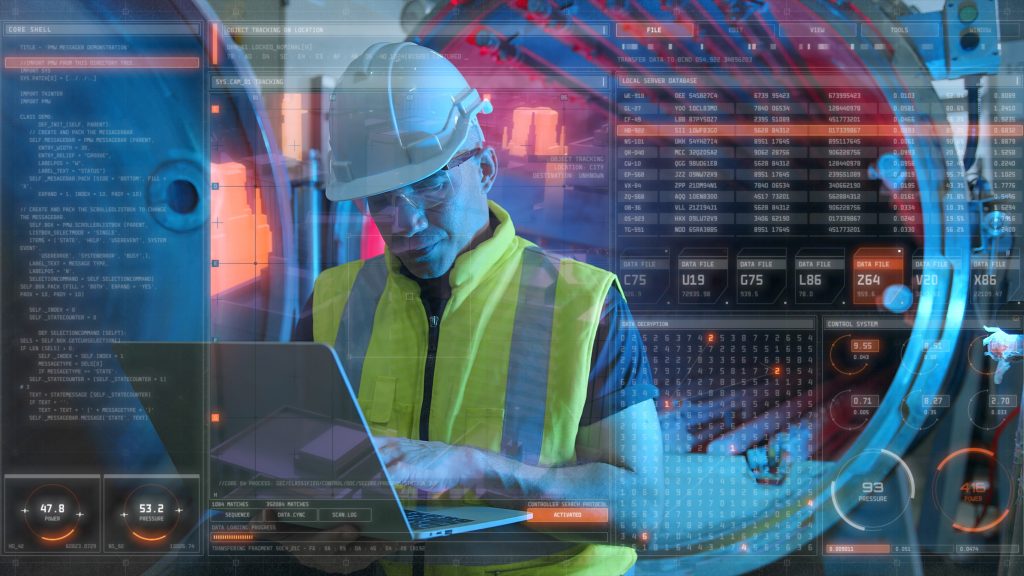
In the industry where HTR operates, AI already has its place. It improves processes, shortens response times, facilitates communication, and enables better data analysis.
But none of these systems change a fundamental fact: industrial processes are not abstract.
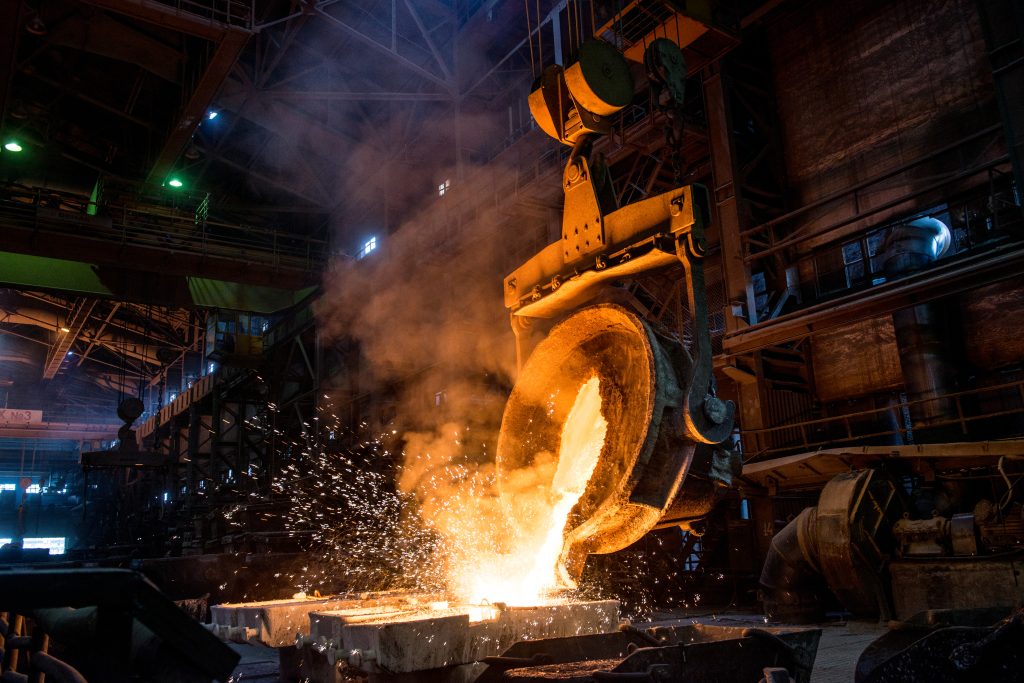
The durability of a refractory ladle in a steel plant does not depend solely on its technical specifications, but on how it is used in real conditions—temperature, production rhythm, and above all, the people managing the process.
A slide gate plate is not just a product—it is part of a system where errors do not have theoretical consequences, but operational ones.
In this context, technology can monitor, measure, and optimize—but it cannot replace situational knowledge that emerges through experience in real working conditions.
The same applies to logistics. Digital tools can optimize routes, predict delays, and improve planning. But the reliability of delivery still depends on the driver who understands the road, the conditions, and the responsibility involved.
In business communication, AI can generate emails, proposals, and analyses—even help me write and shape this article. However, business itself still rests on trust—and trust cannot be automated.
It is built through conversation, continuity, and the ability to understand the other side—not merely as a client or user, but as a partner in the process.
Repeatability Is Not Replaceability
Perhaps the key weakness of contemporary predictions lies in their attempt to equate repeatability with replaceability.
Yes, certain tasks will be automated. Yes, efficiency will increase. But this does not mean that work as a social and industrial phenomenon will disappear—it means that its structure will evolve in ways that cannot be fully modeled outside of context.
The future of work will not be determined by technology alone, but by the relationship between technology and people. And that relationship cannot be one-sided.
In this sense, the companies that will remain relevant are not those that blindly follow technological trends, nor those that ignore them—but those that understand where technology ends and where real work begins.
HTR operates precisely in that space.